
 EN
EN  ES
ES What is Ocean Acidification?
Ocean acidification is the process by which the world’s oceans become more acidic due to the absorption of carbon dioxide (CO₂) from the atmosphere. This process lowers the pH of seawater and reduces the availability of carbonate ions, which are essential for marine organisms such as corals, shellfish, and certain plankton to build their shells and skeletons. This has led to about a 0.1 decline in ocean pH and a corresponding ~20% decrease in carbonate ion concentration since the preindustrial era. Ocean acidification is considered a planetary boundary threat: crossing critical thresholds could disrupt ecosystems and the services they provide, which billions of people rely on.
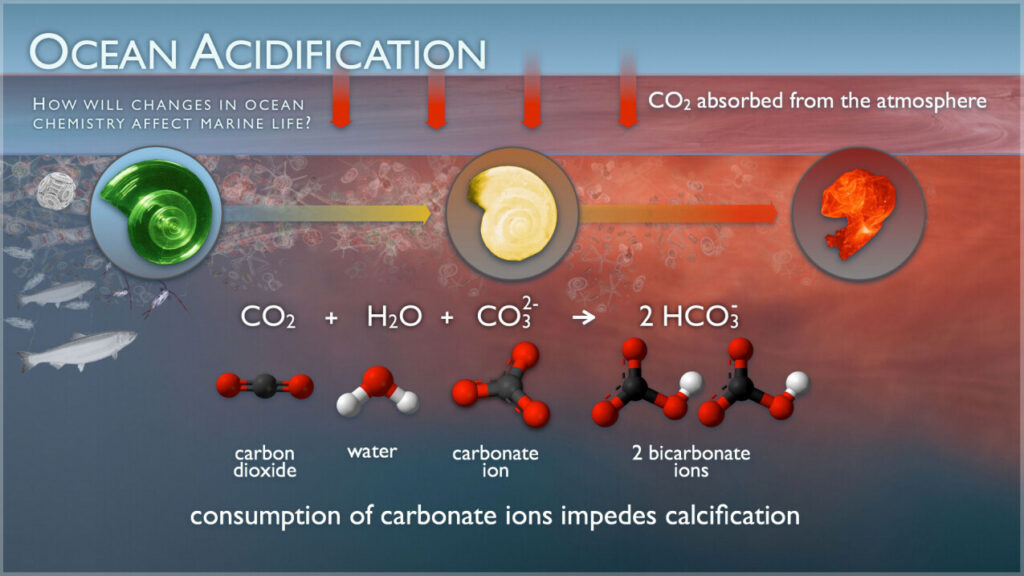
What Causes Ocean Acidification?
Primary Driver: Anthropogenic CO2 Emissions
Ocean acidification is a consequence of the same human activity that causes climate change: CO 2 emissions
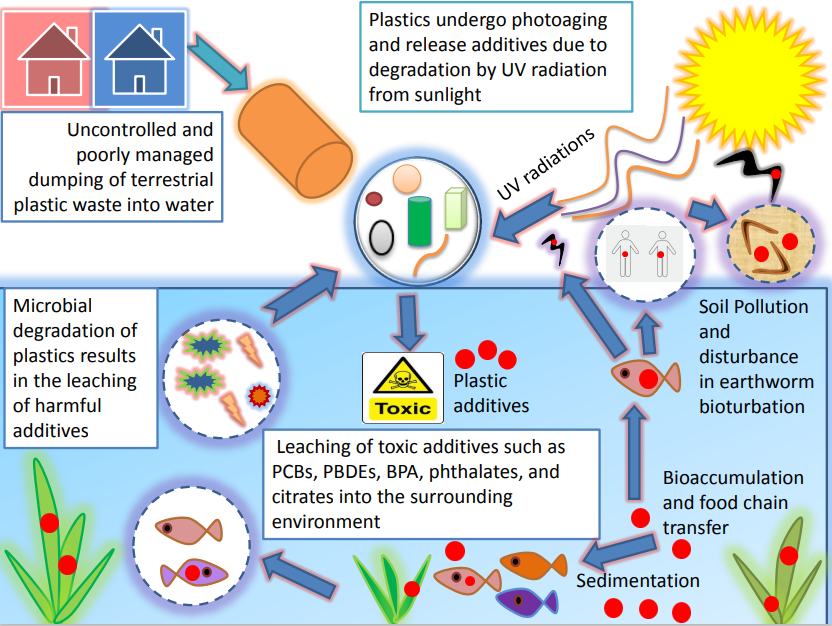
Plastic Degradation and Leaching
Acidification occurs through the leaching of Dissolved Organic Carbon (DOC) and the release of organic acids and CO₂.
Impacts of Ocean Acidification on Marine Ecosystems in the Monterey Bay
Ocean acidification lowers seawater pH and reduces carbonate ions, which are essential for building shells and skeletons.
Calcifying organisms, including oysters, muscles, tiny plankton (such as pteropods), experience weaker shells or slower growth, making them more vulnerable to predators and environmental stress. Their decline weakens reef structures and disrupts marine food webs.
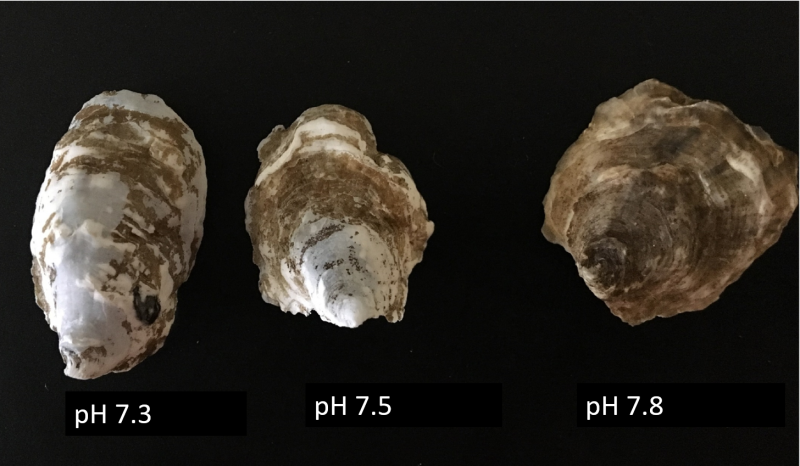
These changes ripple through the food web. When plankton populations decline or become less nutritious, it affects fish like sardines and anchovies, which in turn impacts larger predators such as sea lions, seabirds, and whales. Monterey Bay’s productive fisheries and marine biodiversity are therefore at risk.
Potential Solutions
Reduce CO₂ Emissions: By transitioning to renewable energy, improving energy efficiency, and adopting low-carbon lifestyles, we can limit the amount of CO₂ entering the atmosphere and, in turn, reduce the acidification of oceans.
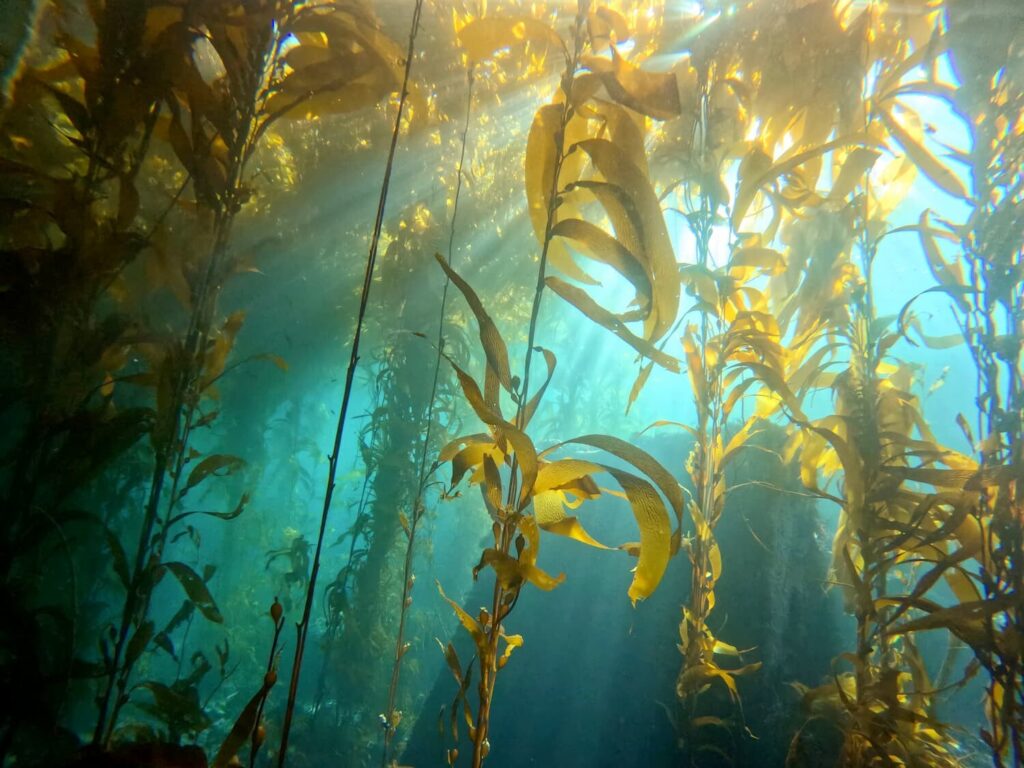
Protect and Restore “Blue Carbon” Habitats: Ecosystems like kelp forests, seagrass beds, and wetlands naturally absorb CO₂ and can locally buffer acidity. In the Monterey Bay, restoring kelp forests not only helps offset acidification but also supports biodiversity and fisheries. This process is also known as phytoremediation.
Reduce Local Pollution and Runoff: Nutrient pollution from agriculture and urban runoff can worsen acidification in coastal waters by fueling processes that lower oxygen and pH. Improving water quality helps reduce these compounding stressors.
Chemical Remediation: This solution directly neutralizes acidified seawater using liming or other buffering methods, such as the addition of alkaline substances like lime or carbonate.
Marine Protected Areas (MPAs) and Monitoring: By reducing fishing pressure and limiting coastal development in these zones, MPAs help ecosystems maintain their resilience against stressors like ocean acidification. Healthy, protected reefs and seagrass beds are better able to support biodiversity, provide food resources, and buffer the impacts of climate change.
Sources
- NOAA (National Oceanic and Atmospheric Administration) – “Ocean Acidification.” https://www.noaa.gov/education/resource-collections/ocean-coasts/ocean-acidification
- Tarantino, J. (2022, January 20). 5 Ways We Can Stop Ocean Acidification. The Environmental Blog. Retrieved from https://www.theenvironmentalblog.org/2022/01/5-ways-we-can-stop-ocean-acidification
- Romera-Castillo, C., Lucas, A., et al. (2023). Abiotic Plastic Leaching Contributes to Ocean Acidification. Science of The Total Environment, doi.org/10.1016/j.scitotenv.2022.158683